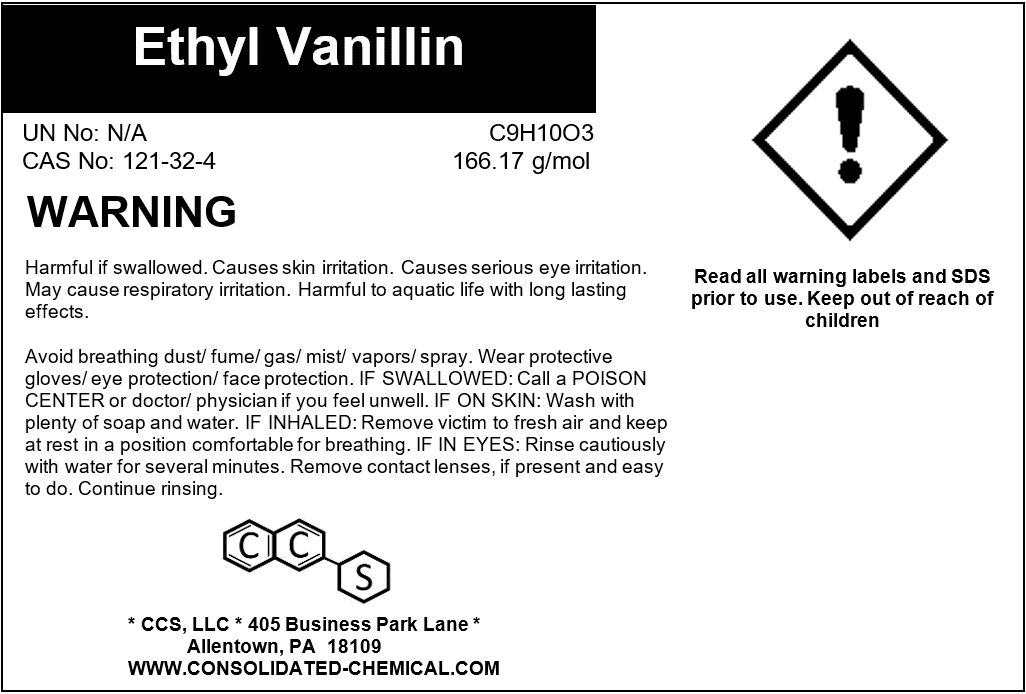
Ethyl Vanillin – High Purity Fragrance and Flavoring Agent
Price range: $14.99 through $79.99
General Information:
-
Product Name: Ethyl Vanillin
-
Chemical Formula: C₉H₁₀O₃
-
CAS Number: 121-32-4
-
Synonyms: 3-Ethoxy-4-hydroxybenzaldehyde, Ethyl 4-hydroxy-3-methoxybenzaldehyde
-
Appearance: White to off-white crystalline powder or solid
-
Odor: Strong, sweet vanilla-like fragrance (stronger than natural vanillin)
Physical Properties:
-
Purity (Minimum): 99%
-
Boiling Point: 285°C (545°F)
-
Melting Point: 80-82°C (176-180°F)
-
Density: 1.146 g/cm³ at 20°C
-
Refractive Index: 1.535 at 20°C
-
Flash Point: 140°C (284°F)
-
Solubility:
-
Soluble in alcohol, acetone, oils, and other organic solvents
-
Slightly soluble in water (0.3 g/100 mL at 25°C)
-
Description
Ethyl Vanillin is a synthetic flavor and fragrance compound, widely used in the food, beverage, and cosmetic industries. It has a rich, vanilla-like aroma and is a more potent and stable substitute for natural vanillin. With its distinctive sweet and creamy scent, Ethyl Vanillin is ideal for enhancing the flavor profiles of a variety of products, including baked goods, candies, and perfumes.
Applications:
Flavoring Agent:
- Food & Beverages: Ethyl Vanillin is widely used to enhance the flavor of food and beverages, particularly in products like chocolates, candies, ice cream, baked goods, and soft drinks. Its strong vanilla flavor makes it a popular choice as a vanilla substitute.
- Sweets & Confectionery: It’s commonly used in candy, gum, and baked goods to create a rich, creamy vanilla flavor profile.
Fragrance Ingredient:
- Perfumes & Colognes: Due to its strong, sweet vanilla fragrance, Ethyl Vanillin is used in perfumes, lotions, soaps, and air fresheners. It provides a warm, creamy note to floral, fruity, and gourmand fragrance formulations.
- Candles & Home Fragrance Products: It is commonly found in scented candles, room sprays, and other home fragrance items.
Cosmetic & Personal Care Products:
- Skin & Hair Care: It is used in lotions, creams, shampoos, and conditioners due to its pleasant fragrance and skin-conditioning properties.
- Emollient & Antioxidant: Ethyl Vanillin can also act as an antioxidant and a mild emollient, helping to soften the skin and protect it from environmental damage.
Aromatic Enhancer:
- Pharmaceuticals: Ethyl Vanillin can be used as an aromatic enhancer in medicines, especially for masking unpleasant tastes or odors in liquid formulations.
Industrial Uses:
- Plasticizers & Polymers: Ethyl Vanillin is sometimes used in the production of certain plastics and polymers due to its chemical properties.
- Cleaning Products: It can be added to cleaning agents and detergents to provide a pleasant fragrance.
Storage of Ethyl Vanillin:
-
Temperature:
-
Store in a cool, dry place, away from direct heat and sunlight.
-
Ideal storage temperature is between 15°C and 30°C (59°F to 86°F).
-
-
Packaging:
-
Keep Ethyl Vanillin in tightly sealed containers to prevent contamination and evaporation.
-
Store in glass or plastic containers that are resistant to chemicals and light (amber bottles are ideal to protect from UV exposure).
-
-
Ventilation:
-
Ensure adequate ventilation in storage areas to avoid the accumulation of vapors, though the compound is not highly volatile under normal conditions.
-
-
Avoid Incompatibles:
-
Keep Ethyl Vanillin away from strong oxidizing agents or other reactive chemicals, as it may degrade or react under certain conditions.
-
-
Shelf Life:
-
When stored properly, Ethyl Vanillin can have a shelf life of up to 2-3 years.
-
Handling of Ethyl Vanillin:
-
Personal Protective Equipment (PPE):
-
Gloves (preferably nitrile or latex) should be worn to avoid skin contact.
-
Safety goggles or face shields should be used to prevent eye irritation from splashes or vapors.
-
Lab coat or protective clothing is recommended to protect skin and clothing.
-
-
Ventilation:
-
Work in a well-ventilated area or use a fume hood if handling large quantities or working in enclosed spaces to avoid inhaling vapors.
-
-
Spill Management:
-
In case of spills, contain the spill using absorbent materials such as sand, vermiculite, or spill pads.
-
Clean up using proper techniques and dispose of waste materials in accordance with local environmental regulations.
-
-
Handling Precautions:
-
Avoid direct contact with skin and eyes.
-
If Ethyl Vanillin is ingested or inhaled in large amounts, seek immediate medical attention.
-
Always ensure containers are properly labeled and securely closed after use.
-
Safety Information:
-
Hazard Classification:
-
Ethyl Vanillin is generally regarded as safe (GRAS) in the amounts used in food and fragrances. However, like many chemicals, prolonged exposure or high concentrations should be avoided.
-
-
First Aid:
-
Skin Contact: Wash thoroughly with soap and water. If irritation persists, seek medical attention.
-
Eye Contact: Flush immediately with plenty of water for at least 15 minutes and seek medical attention if irritation continues.
-
Inhalation: Move to fresh air immediately. If symptoms persist, seek medical attention.
-
Ingestion: Rinse mouth with water and seek medical attention immediately if large quantities are ingested.
-
Additional information
| Size | 50 Grams, 100 Grams, 250 Grams, 500 Grams, 1000 Grams |
|---|
Related products
-

Isovaleric Acid | Premium Fragrance\Aroma Compound
Read more -
1-Octanol (Alcohol C-8) Premium Aroma Fragrance Compound
Price range: $9.99 through $29.99 Select options This product has multiple variants. The options may be chosen on the product page -
Geraniol | High-Purity Fragrance/Aroma Compound
Price range: $12.99 through $249.99 Select options This product has multiple variants. The options may be chosen on the product page -
Alpha-Humulene | Premium Fragrance\Aroma Compound
Price range: $17.00 through $64.99 Select options This product has multiple variants. The options may be chosen on the product page