Methylcyclohexane
Price range: $85.00 through $120.00
Technical Specifications – Methylcyclohexane
Chemical Identification
- Chemical name: Methylcyclohexane
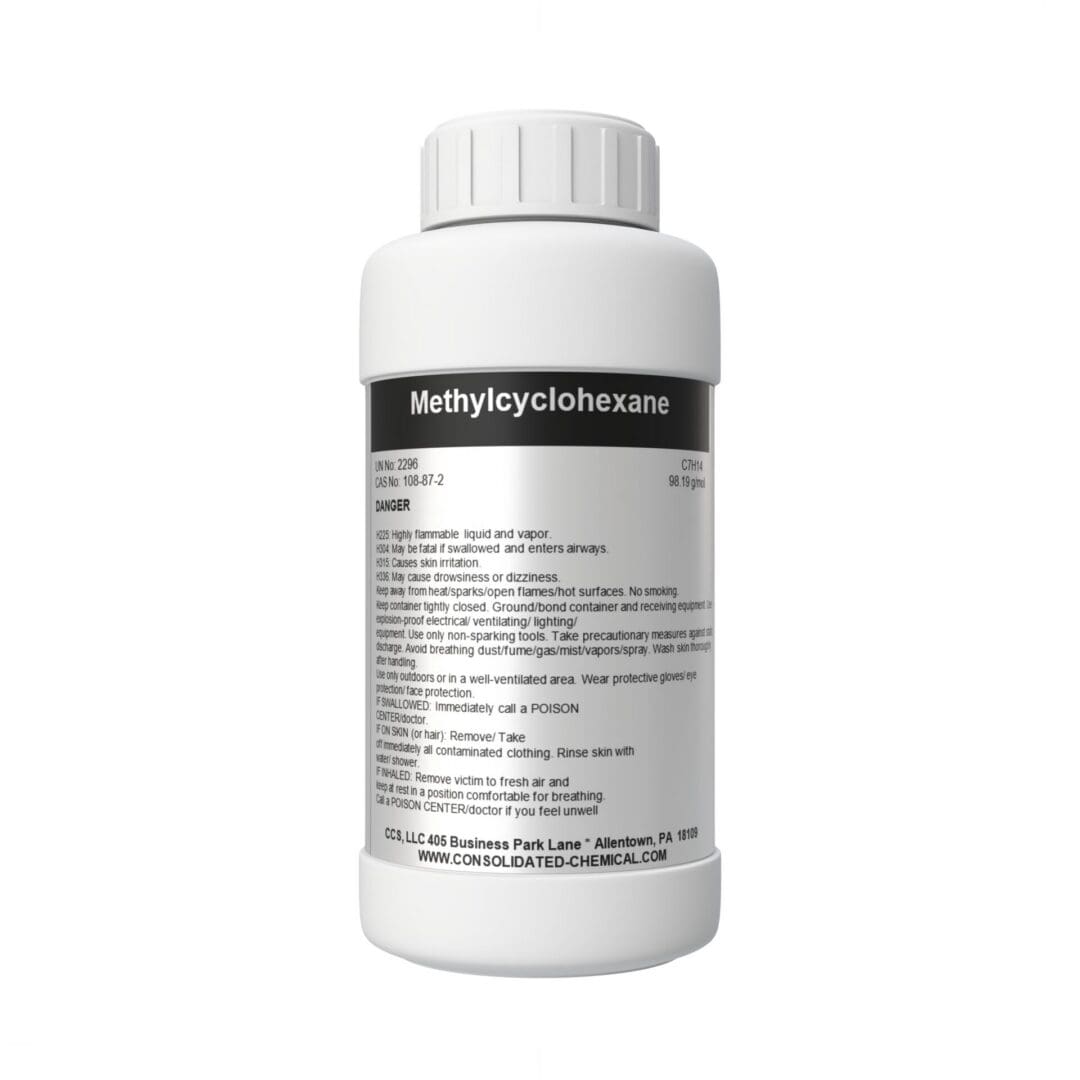
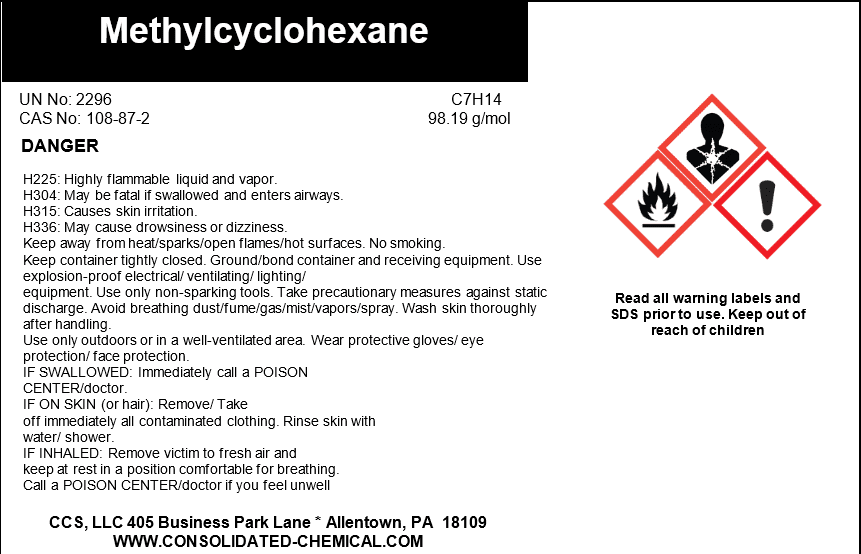
- CAS Number: 108-87-2
- Molecular formula: C₇H₁₄
- Molecular weight: 98.19 g/mol
- Chemical class: Alicyclic hydrocarbon (cycloalkane)
Physical Properties
- Appearance: Clear, colorless liquid
- Odor: Mild hydrocarbon-like
- Density: ~0.769 g/cm³ at 20°C
- Melting point: ~ -126°C
- Boiling point: ~100.9–101.3°C
- Refractive index (nD20): ~1.423
- Vapor pressure: ~4.9 kPa at 20°C
- Viscosity: ~0.7 mPa·s at 25°C
Description
Methylcyclohexane is a clear, colorless, and highly flammable alicyclic hydrocarbon widely used as a non-polar solvent in industrial and laboratory applications. With the chemical formula C₇H₁₄, it is a cyclohexane derivative featuring a single methyl substitution, giving it a balance of volatility, stability, and excellent solvency for non-polar compounds.
Known for its low aromatic content and relatively mild odor, Methylcyclohexane is commonly selected as a safer alternative to aromatic solvents like toluene in applications where reduced toxicity and improved environmental profile are important considerations.
Applications of Methylcyclohexane:
Methylcyclohexane is a versatile non-polar solvent used across industrial, laboratory, and research settings due to its stability, volatility, and strong solvency for hydrocarbons and other organic materials.
Industrial Solvent
- Used in coatings, paints, varnishes, and lacquers as a replacement for more hazardous aromatic solvents
- Helps dissolve resins, oils, and waxes in adhesive and sealant formulations
- Employed in rubber and polymer processing for cleaning and formulation steps
Chemical Manufacturing
- Serves as a reaction medium in organic synthesis where inert, non-polar conditions are required
- Used in extraction and separation processes for hydrocarbons and organic compounds
- Intermediate or carrier solvent in fine chemical production
Laboratory & Research Use
- Common solvent in chromatography and analytical chemistry
- Used as a reference compound in fuel research and combustion studies due to its well-defined properties
- Supports synthesis reactions requiring non-reactive hydrocarbon environments
Fuel and Energy Research
- Utilized in studies of combustion behavior and engine performance
- Acts as a model compound for cycloalkane behavior in fuels
Cleaning and Degreasing
- Applied in industrial cleaning formulations for removing non-polar contaminants such as oils and greases
- Used in precision cleaning where residue-free evaporation is important
Storage Requirements
- Container type: Store in tightly sealed containers made of compatible materials such as stainless steel or approved hydrocarbons-resistant drums.
- Temperature: Keep in a cool, well-ventilated area away from heat sources, sparks, and direct sunlight.
- Ventilation: Use explosion-proof ventilation systems in storage facilities to prevent vapor accumulation.
- Segregation: Store separately from oxidizing agents, strong acids, and sources of ignition.
- Grounding: Containers and transfer equipment should be properly grounded and bonded to prevent static discharge.
- Fire safety: Keep away from open flames and ensure fire suppression systems (foam, dry chemical, or CO₂) are available nearby.
Handling Instructions:
- Personal Protective Equipment (PPE):
- Wear protective gloves, safety goggles, and a face mask when handling to avoid irritation.
- Avoid direct skin or eye contact as the product is highly concentrated and pungent.
- Ventilation:
- Handle in a well-ventilated area or under an appropriate fume hood to avoid inhaling fumes.
- Spill Management:
- In case of spills, use absorbent materials like sand or cloth to clean up immediately.
- Avoid water, as it can spread the product and worsen the spill area.
- First Aid:
- Skin Contact: Wash immediately with plenty of soap and cool water. Avoid hot water, as it may intensify irritation.
- Eye Contact: Rinse eyes thoroughly with clean water for at least 15 minutes and seek medical attention.
- Inhalation: Move to fresh air immediately. Seek medical attention if irritation persists.
- Warnings:
- Do not ingest.
- Keep away from children and pets.
Additional information
| Size | 100mL (3.3 Fl Oz), 250mL (8 Fl oz) |
|---|
Related products
-

Potassium Phosphate, Dibasic – Kosher Certified
Price range: $14.99 through $27.99 Select options This product has multiple variants. The options may be chosen on the product page -
Monopotassium Phosphate (MKP) – Food Grade
Price range: $24.99 through $34.99 Select options This product has multiple variants. The options may be chosen on the product page -
Ferrofluid Magnetic Liquid
Price range: $12.00 through $260.00 Select options This product has multiple variants. The options may be chosen on the product page -
Methyl Alcohol (Methanol) – Premium Multi-Purpose Solvent
Price range: $12.99 through $79.99 Select options This product has multiple variants. The options may be chosen on the product page