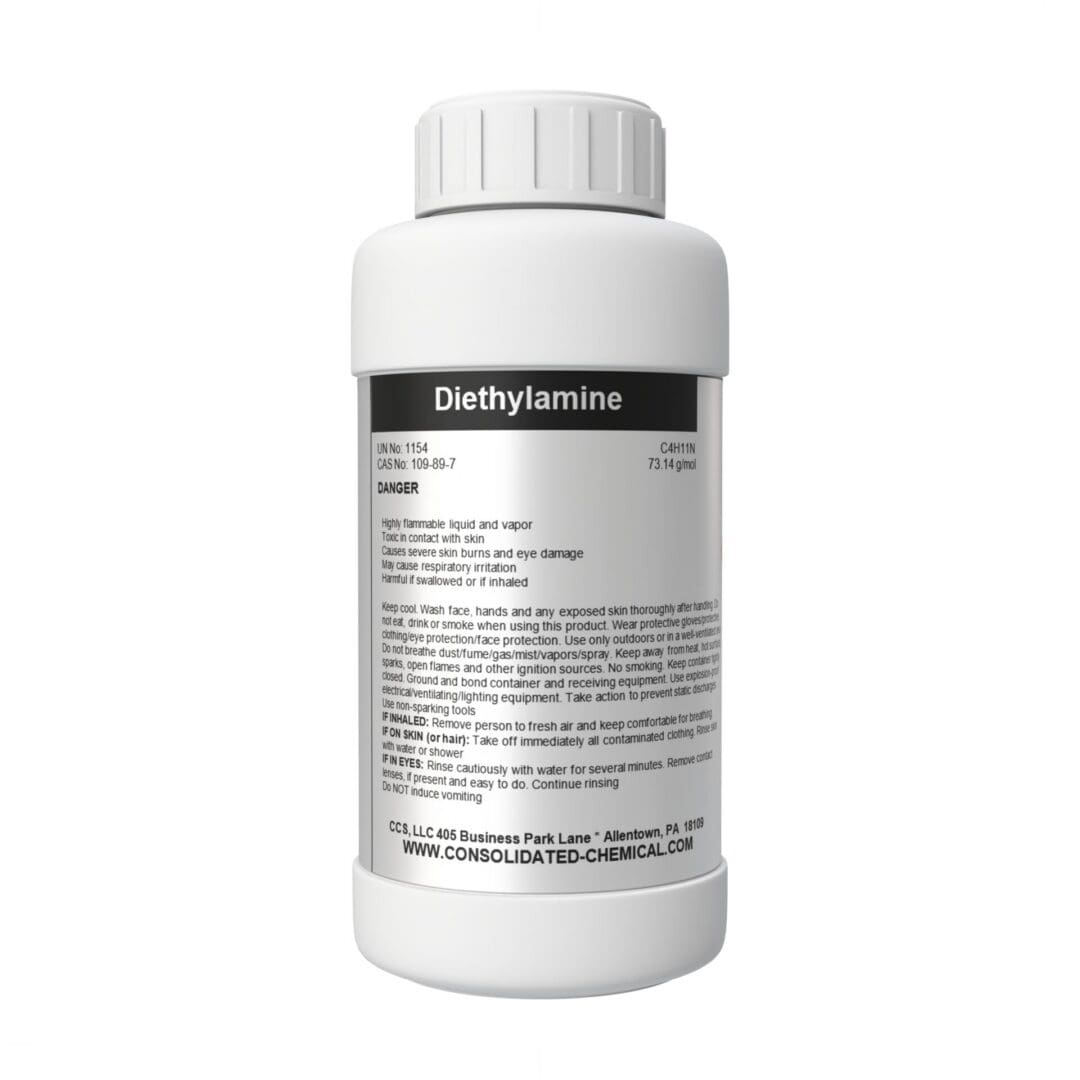
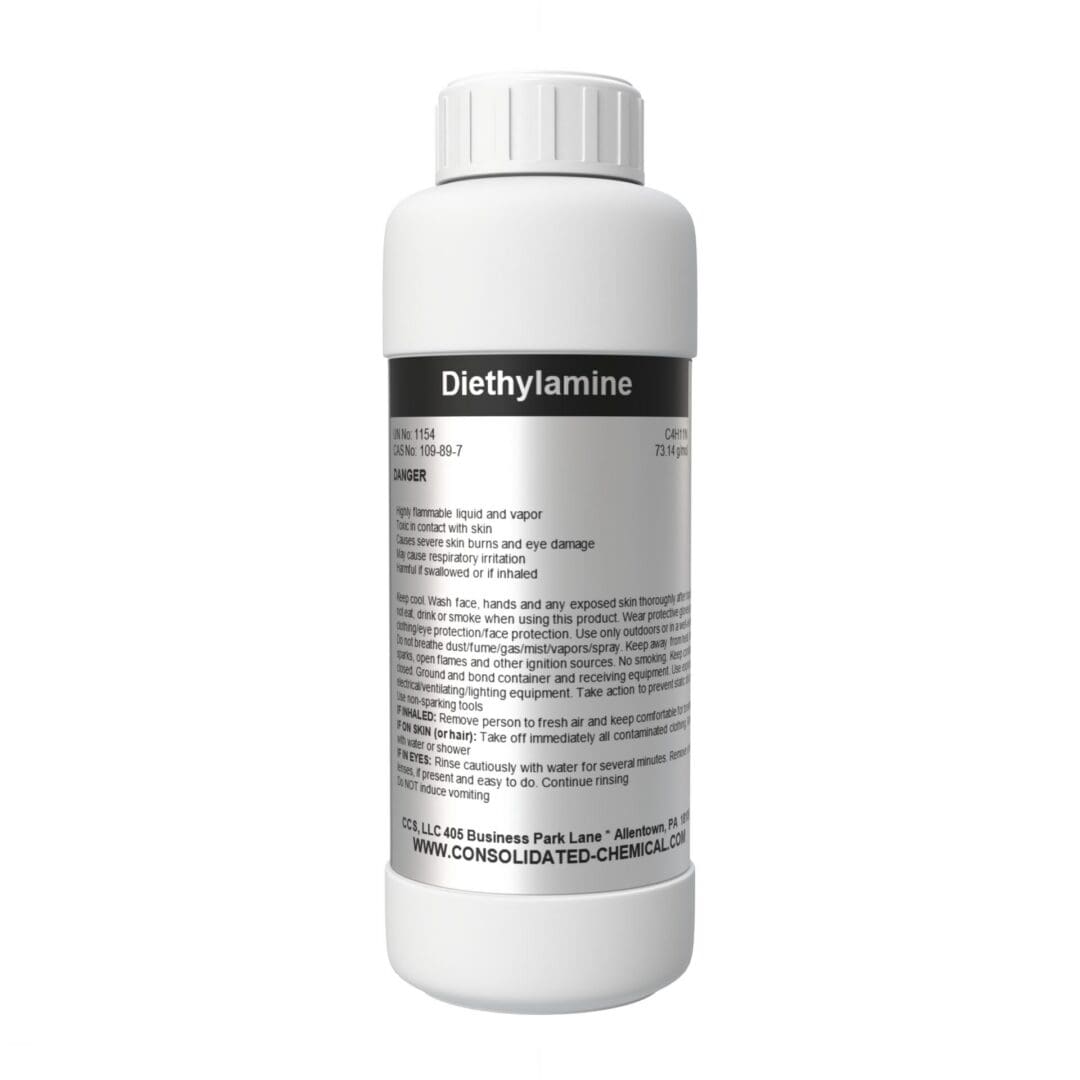
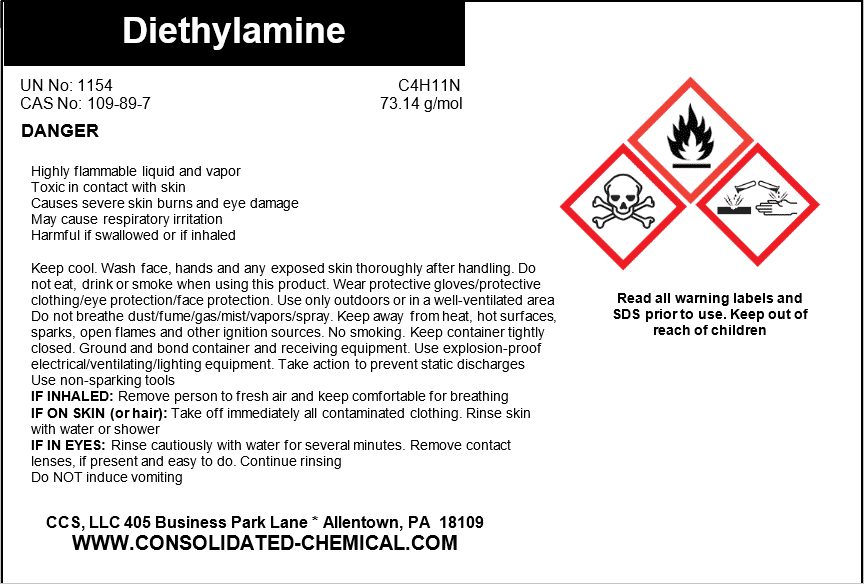
Diethylamine

Price range: $34.99 through $59.99

Technical Specifications – Diethylamine

Chemical Identification

  • Chemical name: Diethylamine
  • CAS Number: 109-89-7
  • Molecular formula: C₄H₁₁N
  • Molecular weight: 73.14 g/mol
  • Chemical class: Secondary aliphatic amine

Physical Properties

  • Appearance: Clear, colorless liquid
  • Odor: Strong ammonia-like odor
  • Boiling point: ~55–57°C
  • Melting point: ~ -50°C
  • Density: ~0.71 g/cm³ at 20°C
  • Refractive index (nD20): ~1.388
  • Vapor pressure: High (highly volatile at room temperature)

Solubility

  • Water solubility: Fully miscible
  • Organic solvents: Miscible with alcohols, ethers, and many organic solvents

Description

Diethylamine is a clear, volatile liquid with a strong ammonia-like odor and the formula C₄H₁₁N. It is a highly reactive secondary amine widely used as an intermediate in pharmaceuticals, agrochemicals, rubber processing, and organic synthesis.Fully miscible with water and most organic solvents, it is valued for its strong basicity and versatility in chemical manufacturing and laboratory applications. Due to its flammable and corrosive nature, it must be handled with proper safety precautions and adequate ventilation.

Applications of Diethylamine:

  • Pharmaceutical manufacturing: Intermediate in the synthesis of active pharmaceutical ingredients (APIs) and drug compounds
  • Agrochemicals: Used in the production of herbicides, pesticides, and plant protection chemicals
  • Organic synthesis: Acts as a building block and catalyst in various chemical reactions
  • Rubber & polymer industry: Used in processing aids and chemical modifiers
  • Corrosion inhibitors: Component in formulations that protect metals from oxidation and corrosion
  • Fuel additives: Used in specialized fuel treatment and performance additives
  • Laboratory reagent: Commonly used in research, analytical chemistry, and synthesis studies
  • Solvent applications: Occasionally used as a reactive solvent in chemical processes

Storage Requirements

  • Store in tightly sealed containers made of compatible materials (e.g., stainless steel or approved chemical-resistant drums).
  • Keep in a cool, dry, and well-ventilated area away from direct sunlight and heat sources.
  • Maintain storage away from oxidizing agents, acids, and ignition sources.
  • Use explosion-proof ventilation systems to prevent vapor buildup.
  • Ensure containers are properly grounded and bonded to reduce static discharge risk.

Handling Precautions

  • Handle only in well-ventilated areas or fume hoods.
  • Avoid inhalation, skin contact, and eye exposure due to corrosive vapors.
  • Wear appropriate PPE:
    • Chemical-resistant gloves
    • Safety goggles or face shield
    • Protective clothing or lab coat
  • Keep away from open flames, sparks, and hot surfaces.
  • Use closed systems or transfer equipment to minimize vapor release.
  • Wash thoroughly after handling and avoid contamination of work surfaces.

Spill & Leak Response

  • Remove all ignition sources immediately.
  • Contain spill using inert absorbent materials.
  • Ventilate area thoroughly.
  • Dispose of waste according to local hazardous chemical regulations.

Additional information

Size

100mL (3.3 Fl Oz), 250mL (8 Fl Oz)

SKU: N/A Categories: , , , Tags: , , , , , , , , , , , , , , , , , , , , , , , , , , , , , , , , , , , , , , , , , , , , , , , , , , , , , , , , , , , , , , , , , , , , , , , , , , , , , , , , , , , , , , , , ,