Ethyl Alcohol (Ethanol) – ACS Grade
Price range: $14.99 through $69.99
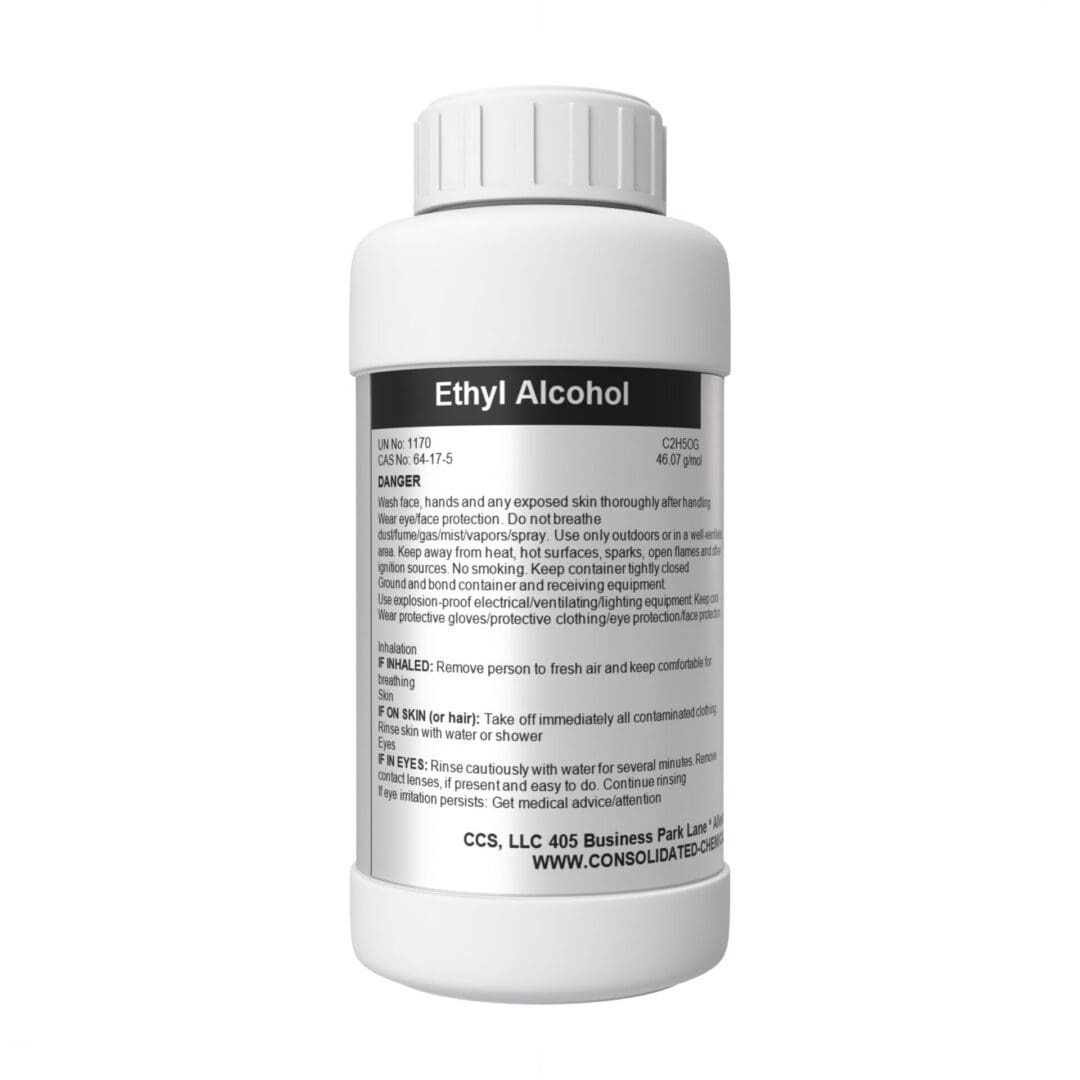
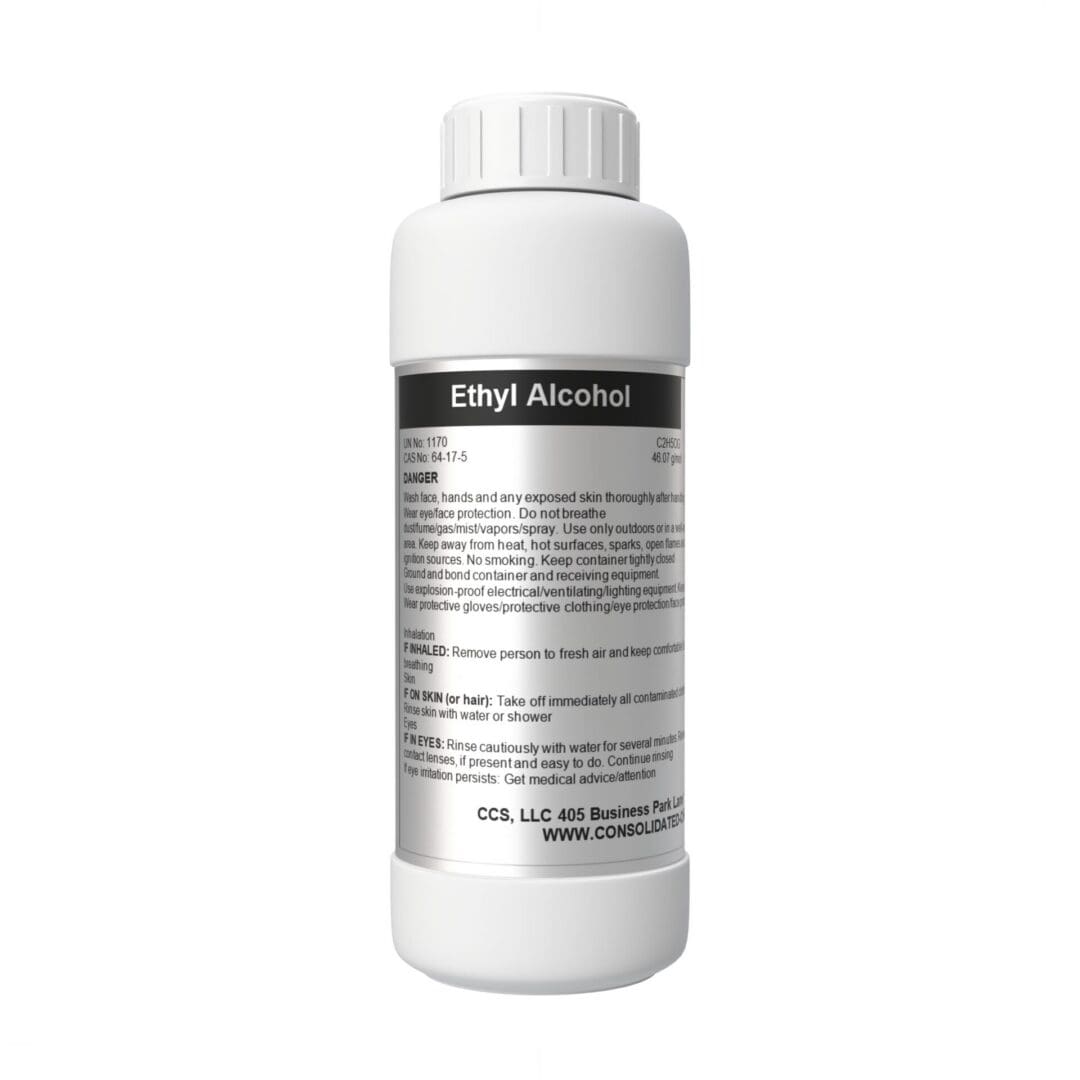
- Product Name: Ethanol
- Chemical Name: Ethyl Alcohol
- Chemical Formula: C₂H₅OH
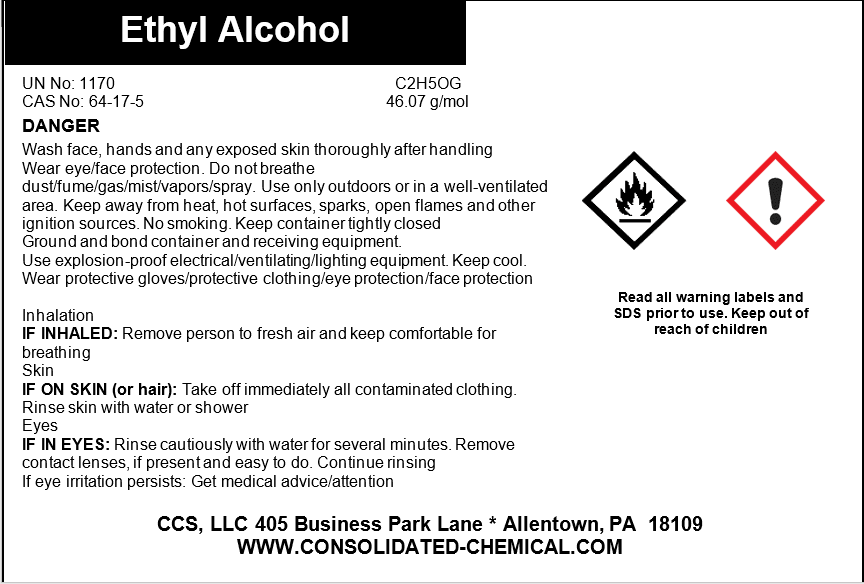
- Molecular Weight: 46.07 g/mol
- CAS Number: 64-17-5
- UN Number: 1170
Appearance
- Clear, colorless liquid
- Free from visible impurities
- Characteristic alcoholic odor
Purity
- Ethanol content: ≥ 99.5%
- Water content: ≤ 0.5%
- Methanol: ≤ 0.1%
- Acidity (as acetic acid): ≤ 0.003%
- Non-volatile residue: ≤ 0.001%
Physical Properties
- Density at 20°C: 0.789 g/cm³
- Boiling point: 78.37°C
- Melting point: -114.1°C
- Flash point: 12°C
- Auto-ignition temperature: 363°C
- Solubility: Completely miscible with water
- Refractive index (20°C): 1.361
Description
Ethyl Alcohol, also known as ethanol, is a clear, colorless, and highly volatile liquid with a characteristic mild odor. It is one of the most widely used organic chemicals globally, valued for its exceptional solvency, antiseptic properties, and versatility across multiple industries. Ethyl Alcohol is available in various grades, including industrial, laboratory/reagent, and pharmaceutical, making it suitable for a wide range of applications.
Applications for Ethyl Alcohol:
- Pharmaceutical Industry: Used in the preparation of medicines, tinctures, and vaccines.
- Cosmetics & Personal Care: A key ingredient in perfumes, lotions, and hygiene products.
- Laboratory & Research: Solvent for chemical reactions, extraction processes, and analytical procedures.
- Disinfectants & Sanitizers: Essential for healthcare, food service, and household sanitation.
- Industrial Uses: Fuel additive, cleaning agent, and raw material in chemical production.
Storage and Handling of Ethyl Alcohol (Ethanol)
Storage Guidelines:
- Environment: Store in a cool, dry, and well-ventilated area, away from direct sunlight and sources of heat or ignition.
- Containers: Keep in tightly sealed, corrosion-resistant containers made of compatible materials such as glass, stainless steel, or approved plastics. Avoid metal containers that may react with ethanol.
- Segregation: Store away from oxidizing agents, acids, alkalis, and combustible materials to prevent chemical reactions and fire hazards.
- Temperature Control: Ideally, maintain storage temperature below 25°C (77°F). Avoid exposure to freezing temperatures or extreme heat.
- Ventilation: Ensure proper ventilation to prevent accumulation of flammable vapors. Vapors are heavier than air and may collect near the floor.
Handling Instructions:
- Personal Protective Equipment (PPE):
- Wear protective gloves, safety goggles, and a face mask when handling to avoid irritation.
- Avoid direct skin or eye contact as the product is highly concentrated and pungent.
- Ventilation:
- Handle in a well-ventilated area or under an appropriate fume hood to avoid inhaling fumes.
- Spill Management:
- In case of spills, use absorbent materials like sand or cloth to clean up immediately.
- Avoid water, as it can spread the product and worsen the spill area.
- First Aid:
- Skin Contact: Wash immediately with plenty of soap and cool water. Avoid hot water, as it may intensify irritation.
- Eye Contact: Rinse eyes thoroughly with clean water for at least 15 minutes and seek medical attention.
- Inhalation: Move to fresh air immediately. Seek medical attention if irritation persists.
- Warnings:
- Do not ingest.
- Keep away from children and pets.
Additional information
| Size | 100mL (3.3 Fl Oz), 250mL (8 Fl oz), 500mL (16 Fl oz), 1000mL (32 Fl oz) |
|---|
Related products
-

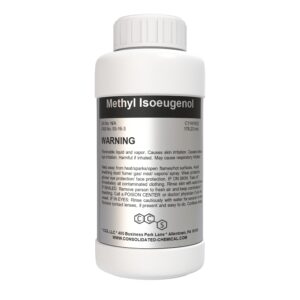
Methyl Isoeugenol – High-Quality Aroma and Flavor Ingredient
Price range: $9.99 through $19.99 Select options This product has multiple variants. The options may be chosen on the product page -
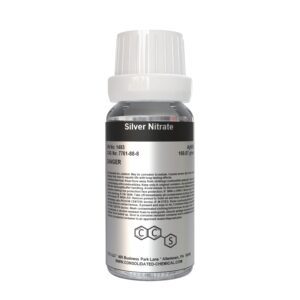
Silver Nitrate – Premium High-Purity Grade
Price range: $19.99 through $220.00 Select options This product has multiple variants. The options may be chosen on the product page -
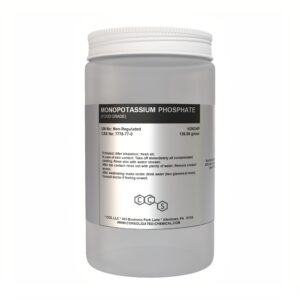
Monopotassium Phosphate (MKP) – Food Grade
Price range: $24.99 through $34.99 Select options This product has multiple variants. The options may be chosen on the product page -
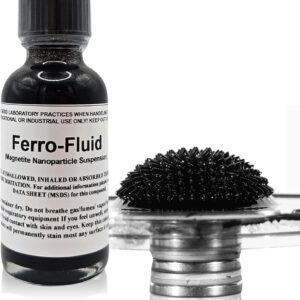
Ferrofluid Magnetic Liquid
Price range: $12.00 through $260.00 Select options This product has multiple variants. The options may be chosen on the product page