Tartaric Acid | High-Purity Crystalline Powder | Food Grade
Price range: $19.99 through $28.00
Chemical Information
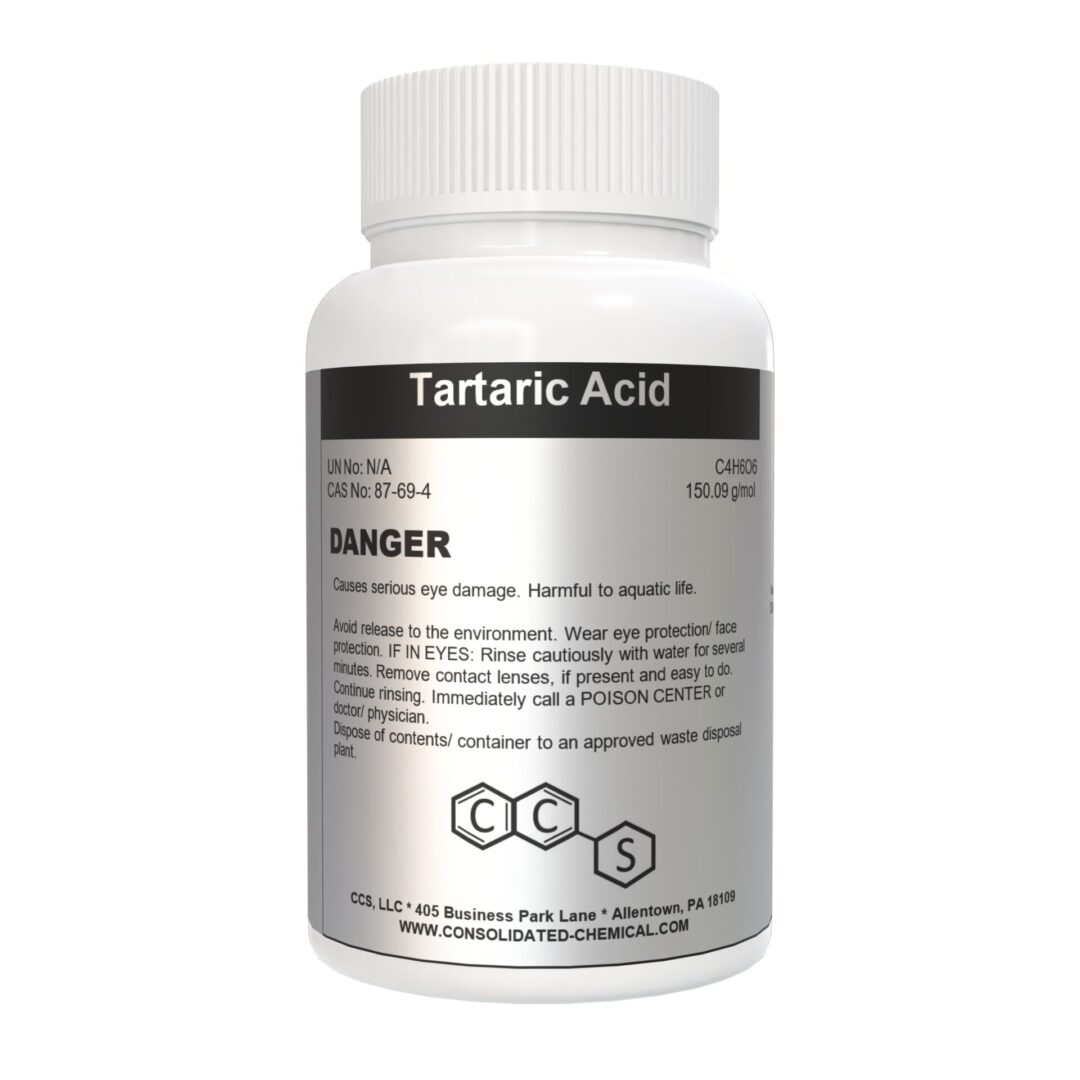
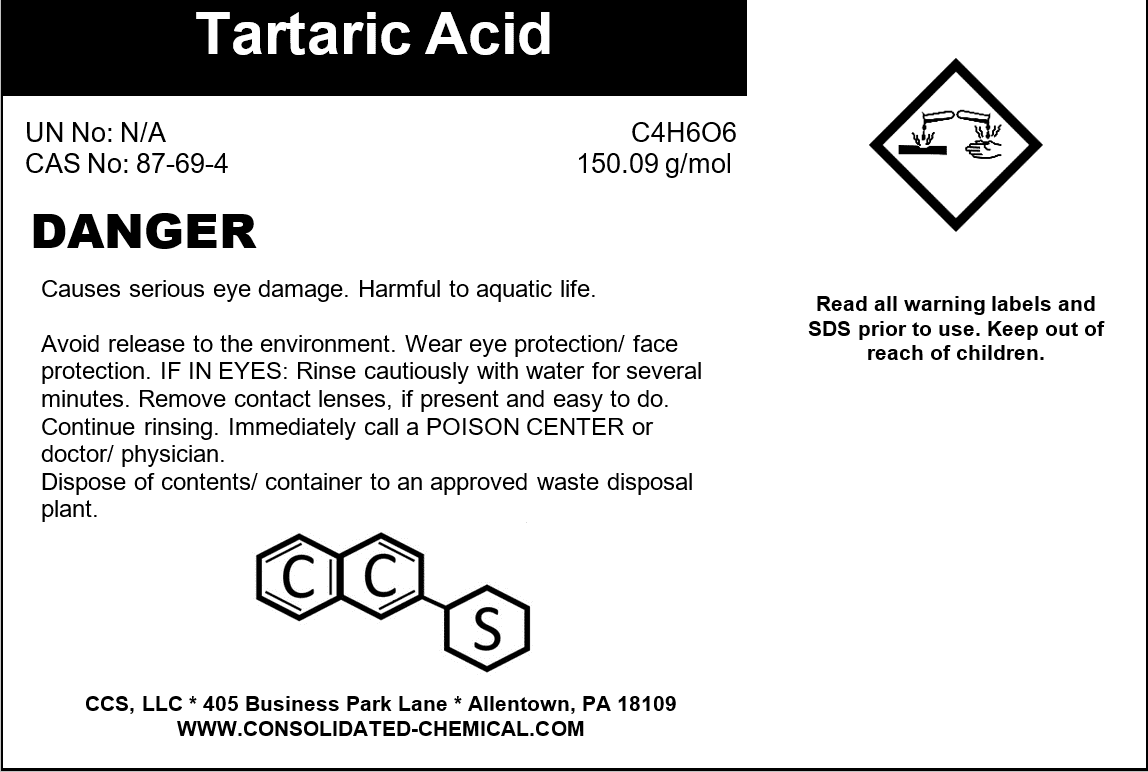
- Chemical Name: Tartaric Acid
- CAS Number: 87-69-4
- Molecular Formula: C₄H₆O₆
- Molecular Weight: 150.09 g/mol
- Appearance: White, crystalline powder
- Odor: Odorless
Physical & Chemical Properties
- Melting Point: 168 – 170°C
- Density: 1.76 g/cm³
- Solubility: Soluble in water, ethanol, and methanol
- Viscosity: Low viscosity in aqueous solutions
- pH (1% solution): 2.0 – 3.0
- Biodegradability: Readily biodegradable
Mechanical & Stability Properties
- Combustibility: Non-combustible
- Flash Point: Not applicable
- Refractive Index: N/A
- Tensile Strength: Not applicable
Description
Tartaric Acid (C₄H₆O₆) is a naturally occurring organic acid found in various plants, particularly grapes, tamarinds, and bananas. It is widely used in the food and beverage industry as an acidulant and antioxidant, in the pharmaceutical sector for effervescent tablets, and in industrial applications such as ceramics, textile printing, and electroplating. This high-purity tartaric acid is available in food-grade, pharmaceutical-grade, and industrial-grade variants, ensuring suitability for a broad range of applications.
Applications of Tartaric Acid
1. Food & Beverage Industry
- Acidulant & Preservative: Enhances sourness and extends shelf life.
- Baking Applications: Key ingredient in cream of tartar for stabilizing egg whites.
- Beverage Industry: Used in winemaking to regulate acidity and improve taste.
- Confectionery & Jams: Prevents sugar crystallization in candies and jams.
2. Industrial & Manufacturing Applications
- Electroplating & Metal Cleaning: Helps remove oxide layers from metals.
- Ceramics & Textile Printing: Used as a dispersing agent and stabilizer.
- Construction & Cement Retardant: Enhances setting time in gypsum and cement.
3. Agriculture & Animal Feed
- Soil Conditioning: Improves soil pH balance and microbial activity.
- Animal Feed Additive: Used to enhance palatability and digestion in livestock.
Storage
- Store in a cool, dry, and well-ventilated area away from heat and moisture.
- Keep in airtight, sealed containers to prevent exposure to humidity and air, which can lead to degradation.
- Avoid storage near alkalis, oxidizing agents, or moisture-sensitive materials.
- Recommended storage temperature: Below 25°C (77°F).
- Protect from direct sunlight and extreme temperature fluctuations.
Handling Instructions:
- Personal Protective Equipment (PPE):
- Wear protective gloves, safety goggles, and a face mask when handling to avoid irritation.
- Avoid direct skin or eye contact as the product is highly concentrated and pungent.
- Spill Management:
- In case of spills, use absorbent materials like sand or cloth to clean up immediately.
- Avoid water, as it can spread the product and worsen the spill area.
- First Aid:
- Skin Contact: Wash immediately with plenty of soap and cool water. Avoid hot water, as it may intensify irritation.
- Eye Contact: Rinse eyes thoroughly with clean water for at least 15 minutes and seek medical attention.
- Inhalation: Move to fresh air immediately. Seek medical attention if irritation persists.
- Warnings:
- Do not ingest.
- Keep away from children and pets.
Safety
- Non-toxic, but prolonged exposure may cause mild skin, eye, or respiratory irritation.
- If ingested in large quantities, seek medical attention immediately.
- Follow standard industrial hygiene practices: wash hands thoroughly after handling.
- Dispose of waste according to local environmental regulations.
Additional information
| Size | 500 Grams (1.1 Lbs), 1000 Grams (2.2 Lbs) |
|---|
Related products
-

Tetrahydrofuran (THF) – Premium High Purity Solvent
Price range: $19.99 through $89.99 Select options This product has multiple variants. The options may be chosen on the product page -
Methylene Blue 1% Aqueous Stain/dye Solution
$12.00 Select options This product has multiple variants. The options may be chosen on the product page -
Monopotassium Phosphate (MKP) – Food Grade
Price range: $24.99 through $34.99 Select options This product has multiple variants. The options may be chosen on the product page -
Ethyl Acetate – Multipurpose Solvent – Industrial and Laboratory
Price range: $14.99 through $105.00 Select options This product has multiple variants. The options may be chosen on the product page